Blood Flow Restriction Therapy
What is blood flow restriction therapy?
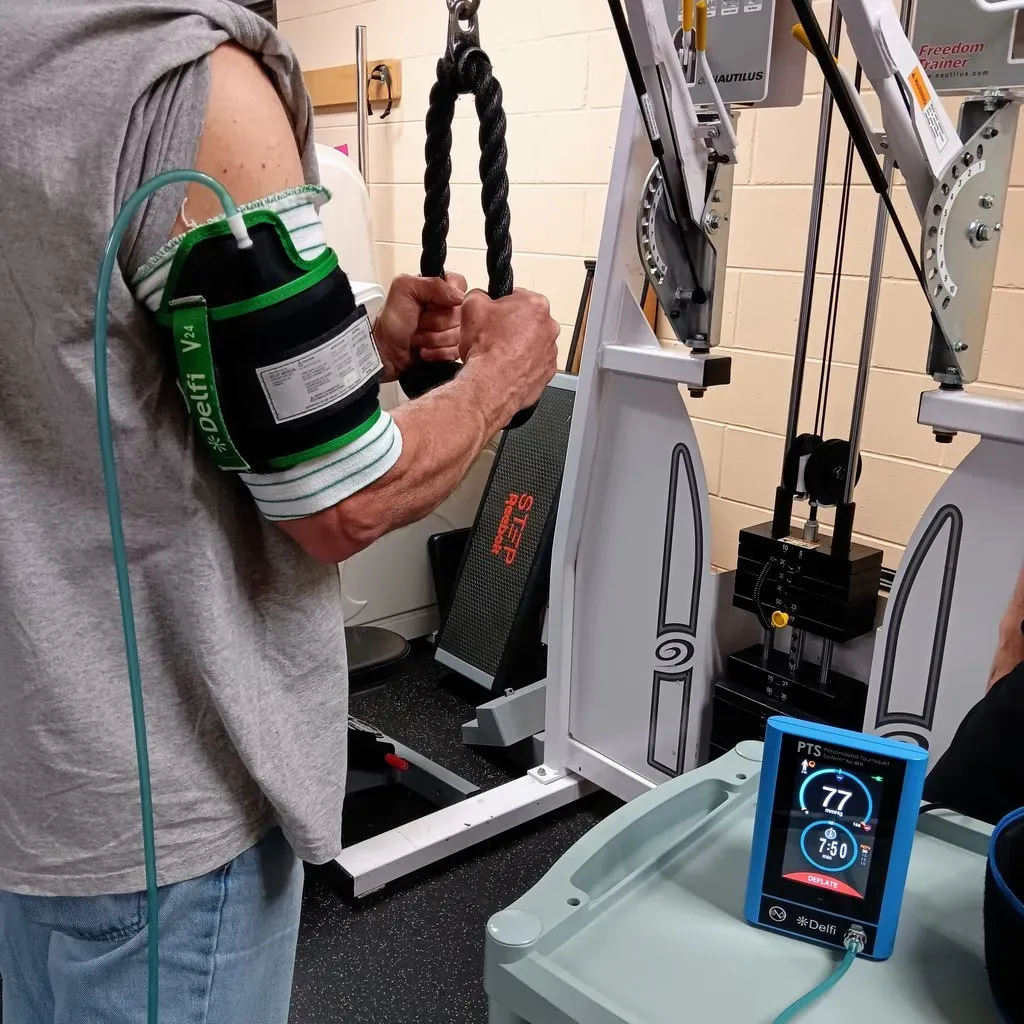
Blood flow restriction, often called BFR, is a physical therapy technique that uses a specialized cuff during low-load exercise. The cuff is placed on the arm or leg and carefully controlled by the therapist. This creates a training effect that can help muscles work harder while using lighter resistance than traditional strengthening.
BFR can be useful when heavy weights are not comfortable, not yet allowed, or not appropriate because of pain, surgery, weakness, or injury. The goal is to support strength and muscle development while reducing stress on healing joints or tissues.
At Mountain Town Rehab, blood flow restriction is supervised by trained providers. The cuff pressure, exercise selection, repetitions, and rest periods are chosen for your body, your stage of recovery, and your goals. We use Owens Recovery Science products to offer the most comfortable experience possible, thanks to a wider tourniquet cuff and modulating pressure during treatment.
Who benefits from blood flow restriction?
BFR may be considered for people with:
-
Weakness after injury or surgery
-
Difficulty tolerating heavier strengthening
-
Knee, hip, shoulder, ankle, or elbow rehab needs
-
Sports injury recovery
-
Muscle loss after immobilization or reduced activity
-
Post-surgical strengthening when cleared by the surgeon
-
Tendon or joint pain that limits traditional loading
BFR is not appropriate for everyone. Your therapist will review your medical history and screen for factors that may make BFR unsafe or require medical clearance.
What to expect during treatment
Your therapist will explain the process, place the cuff on the appropriate limb, and set the pressure based on the device and your response. You will then perform low-load exercises such as leg raises, squats, step-ups, knee extensions, bridges, or arm exercises depending on your plan.
The exercise may feel challenging even though the weight is light. You may feel pressure from the cuff and muscle fatigue during the set. Your therapist monitors your comfort, form, symptoms, and recovery between sets.
BFR is usually only one part of a broader physical therapy plan. It may be paired with mobility work, hands-on care, balance training, sport-specific progression, or a home program.
Why choose Mountain Town Rehab for blood flow restriction?
Mountain Town Rehab offers BFR in a supervised, one-on-one physical therapy setting. Our team includes providers certified or trained in blood flow restriction, orthopedic rehab, sports rehab, and post-surgical strengthening.
Because BFR requires proper screening and individualized dosing, it should be guided by someone who understands both the device and the rehab goal. We use it thoughtfully when it fits the patient, rather than treating it as a one-size-fits-all tool.
Blood flow restriction FAQs
Is blood flow restriction safe?
BFR can be safe when patients are screened appropriately and the technique is supervised by trained clinicians. It is not right for everyone, so your medical history matters.
Does BFR replace regular strengthening?
No. BFR is one tool within a larger rehab plan. As you improve, your therapist may progress you toward more traditional strengthening and functional training.
Will BFR hurt?
You should expect pressure from the cuff and muscle fatigue during exercise. Tell your therapist if you feel numbness, sharp pain, dizziness, unusual symptoms, or discomfort that feels wrong.
Why use BFR instead of heavier weights?
BFR may allow a strengthening stimulus with lighter loads, which can be helpful when heavy resistance is not comfortable or not yet appropriate.
Related condition guides
- ACL Rehab Use progressive loading strategies during ACL recovery when appropriate.
- Knee Pain Build strength while managing symptoms and activity tolerance.
- Knee Arthritis Strength-focused care for arthritic knee pain and mobility limits.
- Patellofemoral Pain Improve kneecap tracking demands with hip and knee strengthening.
- Hamstring Strain Rehab Rebuild lower-extremity capacity during sport rehab.
Other physical therapy services
- Orthopedic Physical Therapy Comprehensive care for joint, muscle, and bone injuries to restore function, build strength, and reduce pain.
- Sports Rehab Treatment plans designed to help athletes recover from injuries and return to activity safely.
- Post-Surgical Care Guided rehabilitation after surgery to restore mobility, rebuild strength, and support healing.